Welcome to GO GREEN..BE GREEN..GREEN LIVING EXPLORED

Within this blog we will explore the hints, tips and techniques of living green in our own personal lives.

We are going to take a more conservative approach to Green Living. No, we don't have to become good little Republicans! We just need to take personal responsibility for ourselves and our community, and not re lie on the government to save the day.

Please, Please, Please!! There will be NO finger pointing and name calling here. There are 100's of other blogs and websites that have that covered. Finger pointing and name calling may make us feel good for the moment, but it has never helped solve one problem.

We will be helping each other to live the green life as best as possible. In turn we can help or friends, family and community. One little step at a time will make a big difference. So lets get started.

Thursday, December 20, 2012

Living Green 365: Refrigerators

Having trouble viewing this message? View it as a webpage.

Living Green 365

Keep your cool, not your 20-year-old refrigerator

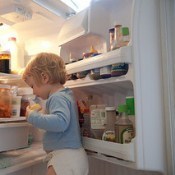
Looking in the frige

You probably look in your refrigerator many times each day, but do you ever look at your refrigerator? Appliances account for about 15% of your household's energy costs, with refrigeration near the top of the list. Keep your food cool without busting your energy budget.

Replace old inefficient refrigerators, even if they still work. Take a peek at the model and year listed on a sticker on the wall inside the refrigerator door.  If your refrigerator was purchased before 1993 (yes, that is already 20 years ago!), it probably uses twice the energy of a new ENERGY STAR model and it is time to replace it. In fact, it might be possible to pay for your new refrigerator within a few years on the electricity savings! To estimate savings based on your specific refrigerator, use the ENERGY STAR refrigerator retirement calculator. Electricity costs are around 12.2 cents per kilowatt hour in Minnesota.

Look for rebates. Many utilities offer rebates for upgrading to ENERGY STAR qualified appliances. You can look at all the incentives and rebates at DSIREUSA.org.

ENERGY STAR logo

Select an ENERGY STAR model. Every appliance comes with two price tags: the purchase price and the cost of operating the product. Look at the operating cost on the yellow Energy Guide label. The ENERGY STAR logo will help you identify the most efficient models.  You can compare models using this list of all the ENERGY STAR qualified refrigerators (PDF).  

Choose efficient features. To get the ENERGY STAR rating, a model has to save 20% of the energy used by a unit with comparable specs. The size and features of any given unit also impact the efficiency.

  • Top-mounted freezers use 10–25% less energy than bottom-mount or side-by-side models.
  • The larger the refrigerator, the greater the energy consumption. The most energy-efficient models are typically 16–20 cubic feet.
  • Automatic ice-makers and through-the-door dispensers increase energy use by 14–20%.

Ask about Solstice insulation. Beginning in 2013, many refrigerators will be made with a new type of foam insulation called Solstice Liquid Blowing Agent. You won't notice in the way the refrigerator looks or feels, but the manufacturing of those refrigerators will create a lot less greenhouse gas equivalents.

Don't put the old refrigerator in the basement or garage. Using the old appliance and adding a new one just increases your energy use.

Recycle your old refrigerator. Minnesota law requires that all major appliances be either reused or recycled. If you are buying a new refrigerator, the delivery service will probably offer to haul away your old appliance. But if you are just getting rid of that extra, old fridge from your basement, you'll need to arrange your own disposal.

  • Xcel Energy customers can check out the Xcel Refrigerator Recycling Program.
  • Some garbage haulers provide curbside pick-up for appliances. Contact yours for information.
  • Some county facilities accept appliances. Find information about your county on RecycleMoreMinnesota.org.
  • Twin Cities disposal and drop-off sites are listed on RethinkRecycling.com.
  • Watch for special collection days in your community. These limited-duration events are usually cheaper and closer to home then other options.

Take care of your refrigerator. A cool location within the house, proper temperature settings, and airtight door seals will help your refrigerator operate efficiently. Leave a few inches between the appliance and the wall and and keep the condenser coils clean if you have an older model. Read the user's manual to learn how to safely clean coils.

Learn more about how you spend your energy dollars. Plug a Watt meter into the refrigerator outlet. How much energy is used every week? How do your other appliances compare? You might be surprised! Minnesota libraries in the northeast and southeast have Kill-A-Watt meters available to check out, just like a book. Even without a Watt meter, you can estimate the cost to run your appliance using directions from the Department of Energy. You'll need to know the wattage of your appliance. Volts and amps are listed on the label inside the refrigerator door. Multiply them to find the wattage (volts x amps = watts). Electricity costs are around 12.2 cents per kilowatt hour in Minnesota.


Community events and resources

Get assistance repairing your broken household items at Hennepin County's next Fix It Clinic, January 12, 10 a.m.-1 p.m., Lyndale Farmstead Park Recreation Center, (Minneapolis).

Learn how the global shift to biofuel crops and production systems will change our landscape, now and in the future, at the The Bell Museum's next CafĂ© Scientifique,  January 15, 7 p.m., Bryant Lake Bowl (Minneapolis). 

If you are a beginning gardener with interest in trying some new fruits and veggies next year, try the Growing Food 101 class from the Permaculture Institute. This class will cover A to Z in the vegetables, fruits, herbs and edible flowers plus a few perennial vegetables that you can grow in Minnesota, January 22, 6-8 p.m., University of Minnesota Rapson Hall (Minneapolis).


Thank you for reading Living Green 365. This newsletter is a publication of the Minnesota Pollution Control Agency. Please send questions or comments about living green to the address below.

Sincerely,

Britt Gangeness and the Living Green Team   

livinggreen365.pca@state.mn.us 


This email was sent to stan6637.gogreen@blogger.com using GovDelivery, on behalf of: Minnesota Pollution Control Agency 
520 Lafayette Road North · Saint Paul, MN 55155 · 1-800-439-1420

Saturday, November 17, 2012

Living Green 365: Holiday gift ideas

Having trouble viewing this message? View it as a webpage.

Living Green 365

Holiday gifts: Give more of what really matters

Having a hard time thinking of low-waste, sustainable gifts for everyone on your list? We surveyed 12 green gift-givers and asked, "What is your favorite gift to give or receive?"

As their answers reveal, the most treasured gifts we can give are our time, love, and energy. Don't be afraid to give gifts that aren't store bought. They are, in fact, the most treasured of all!

Here are their suggestions:

Green gift givers

Breakfast treat of the month. "Several years in a row I gave my grandparents a one-year "breakfast treat of the month." Once a month I made sweet bread, muffins, or coffee cake and brought it to their house. It ensured we would get over there for a visit." --Colleen

Top-10 book list. "My grandma and I share a love of reading. So last year I put together a "Top 10" list of books that I've read and enjoyed and thought that she too would enjoy too. I did buy her one of the books, but suggested that she get the remaining books through the library." --Brian

Green gift giver

Matchbook collage. "During the process of helping my parents downsize, my daughter and I discovered several drawers of matchbooks. These were collected by my father over decades of travel. We decided to cut off the covers these matchbooks and glue them into a dense collage. My father was delighted and continues to enjoy this framed, visual memorial of all the hotels, bars, and restaurants he visited world-wide over more than 30 years." --Philipp

Non-lead fishing tackle. "I gave non-lead fishing tackle to my dad for Christmas. It was an opportunity for me to teach him about why lead tackle is dangerous for wildlife." --Paul

Green gift giver

Walking stick and Minnesota State Park gift card. "I've made a walking stick out of a sturdy, fallen branch. You can skin the bark off, sand it down, and paint or carve a design in it prior to finishing. This gift promotes getting out and enjoying nature. You could even pair it with a Minnesota State Parks annual permit!" --Linda

Memory book. "I bought a notebook and every New Year's we each write down one of our favorite memories from the year on a note card. On New Year's Eve we read the memories and then paste the note card into the notebook, along with a picture related to the memory. It's fun to see what memory the other person chooses. Sometimes it is something really simple and sometimes it is a big event." --Johanna

Green gift giver

A special experience. "Our granddaughter reads and reads and loves to write stories. We gave her a week-long summer writing camp at the Loft in Minneapolis. She thought she was so cool. Other people might like concert tickets, a cooking class, or other membership to a museum." --Phyllis

Jar of love. "My son gave me an empty food jar filled with little notes. Each note listed an activity that he'll do with me. He included experiences like bike ride, canoe, cross country skiing, see a movie, and go to a park. What could be better?" --Madalyn 

Green gift giver

Felted potholders and coasters. "I make potholders and coasters out of old wool sweaters by felting them in the washing machine and cutting them out. The potholders are nice and thick. You can cut out the coasters in lots of shapes." --Theresa

Repaired family heirlooms. "This is a little weird, but I had a really durable vacuum cleaner that I repaired and gave to my son. My son remembers it from growing up and thought it was funny, but he loved it! This would also work with high-quality items like a sewing machine or mixer."--Nancy

Green gift giver

Compost bin or red wiggler worms. "I gave my sister a homemade worm bin for her apartment, complete with red wiggler worms. Getting set up with the bin is the hardest part, so once she had the bin she was willing to use it. You could also offer to build a backyard bin for a family member using these directions and material list." --Kevin

White elephant exchange. "A white elephant exchange is guaranteed to bring a belly-full of laughs. Find something in your home or garage that you no longer want or need, wrap it up and bring it to the family gathering. There are various activities you can do pass out the gifts, such as pick a number, roll the dice, or oldest to youngest. We chose the dice way." --Jeanne

Gift-giving resources


Community events and resources

The State of Minnesota is hosting free, pubic Environmental Congress Citizen Forums across the state in November and December. Join Minnesota state agency commissioners, community leaders, and a diverse group of citizens for a facilitated discussion on air, water, land, energy, and climate. The state wants your insights on what is important for Minnesota's environmental and economic future. Be a part of a new vision for improving and sustaining the health of Minnesota's natural resources and quality of life!

The Will Steger Foundation, Fresh Energy, and the Lutheran Coalition for Public Policy are organizing a series of free public forums about climate change. Hear from Will Steger, Minnesota's own eyewitness to global warming, and Fresh Energy's J. Drake Hamilton about effective clean energy solutions, dates in November & December throughout Minnesota.

Rethink Recycling just released a new Business Recycling Guide. It provides information about where and how to get rid of your organization's stuff.


Thank you for reading Living Green 365. This newsletter is a publication of the Minnesota Pollution Control Agency. Please send questions or comments about living green to the address below.

Sincerely,

Britt Gangeness and the Living Green Team   

livinggreen365.pca@state.mn.us


This email was sent to stan6637.gogreen@blogger.com using GovDelivery, on behalf of: Minnesota Pollution Control Agency 
520 Lafayette Road North · Saint Paul, MN 55155 · 1-800-439-1420

Tuesday, October 23, 2012

Feedlot rules help manage livestock ‘waste’ as a valuable resource

Having trouble viewing this email? View it as a webpage.

For release: Oct. 23, 2012

Contact: Forrest Peterson, 320-441-6972

Note to editors: This is another story about the 40th anniversary of the Clean Water Act. For more information on the act and its legacy, visit http://www.pca.state.mn.us/bkzq1482.


Feedlot rules help manage livestock ‘waste’ as a valuable resource

Willmar, Minn. -- While industrial waste and city sewage captured the spotlight leading up to the Clean Water Act in 1972, agricultural waste was also a growing public concern.

For thousands of years, farmers used livestock manure as fertilizer for crops. However, in recent decades, commercial fertilizer took the lead because it was cheaper and easier to use. Often, manure came to be viewed as an odorous waste. And when allowed to run off into waterways, it causes pollution.

The “waste” reputation is reflected in Minnesota’s rules enacted in 1971 to regulate livestock feedlots through the Minnesota Pollution Control Agency’s Agricultural Waste Division.

Today, that’s changing as rising costs for commercial fertilizer and new technology are restoring the reputation of manure as a valuable fertilizer. Today’s feedlot regulations focus on management rather than disposal of livestock waste.

The livestock industry has changed dramatically over the past 40 years. In 1972, Minnesota Agricultural Statistics reported about 100,000 livestock feedlots in the state. Today, there are fewer feedlots, but more of them are much larger. Of the approximately 25,000 registered feedlots in Minnesota today, about 1,200 of the largest house the majority of animal numbers, and operate under federal permits.

The initial rules in 1971 required livestock producers to control runoff from feedlots and properly use manure as a fertilizer. It set priorities for making feedlot improvements, triggered by complaints about pollution problems or plans for feedlot expansion.

“The whole idea of environmental protection was fairly new, and it received a lot of public acceptance,” Wayne Anderson, who began working in the MPCA feedlot program in 1972, said. “We were able to find a way to link the public acceptance of environmental protection to farmer awareness of manure as a resource.”

The late Milton “Jim” Fellows, a Worthington area farmer, served on the MPCA citizen’s board in the late 1960s and early ’70s. “It was quite an experience to be writing the first regulations,” Fellows said in an interview in 2003. He received one of the first Solid Waste-Ag permits, not for a pollution problem at his cattle feedlot, but “because if we expected others to do it, I would do it myself. We used the site as example of feedlot pollution control.”

In 1974, the MPCA launched a program that brought counties into direct participation with regulation of livestock feedlots. Today, 55 counties participate in the delegated county agreement.

“They recognized the value of local people being partners in this,” Anderson said. “There was no funding for counties in the early days, but they took it on because it was the right thing to do.”

Jackson County in southwestern Minnesota was the first to join the delegated county program. The county was in the process of reorganizing, and in 1974 created an environment office, including parks and feedlots. The Jackson County Extension agent, Ray Palmby, urged the county board to become delegated and name a county feedlot officer. The job went to the late Paul Hartman, a livestock dealer and banker from Okabena.

“Paul and I drove around to meet with farmers,” Wayne said. “We were out soliciting in many counties, meeting with county commissioners, and making personal contact. We’ve come a long way since then, with providing training and some funding for counties.”

Dennis Hanselman, who succeeded Hartman as Jackson County feedlot officer in 1978 until 1990, recalled the early years: “Overall, it worked fairly well. We were ahead of other counties in planning and zoning, and feedlot permits. Land application was a big problem, and odor complaints, mostly from open pits.” Hanselman later joined the MPCA staff in Detroit Lakes, retiring last year.

The MPCA regulates the collection, transportation, storage, processing and disposal of manure and other livestock operation wastes. The rules apply to most aspects of livestock waste management, including the location, design, construction, operation and management of feedlots and manure-handling facilities.

There are two primary concerns about feedlots in protecting water in our agricultural areas. The first is ensuring that manure on a feedlot or manure-storage area does not run into water. The second is ensuring that nutrient-rich manure is applied to cropland at a rate, time and method that prevents nutrients and other possible contaminants from entering streams, lakes and groundwater.

Following a major revision of Minnesota’s feedlot rules (Chapter 7020) in 2000, the U.S. Environmental Protection Agency recognized the state’s feedlot program: “Minnesota has a unique and successful program for preventing water pollution from feedlots. In addition to ensuring that larger feedlots meet Clean Water Act regulations, the Minnesota Pollution Control Agency works effectively with county governments, the Minnesota Board of Water and Soil Resources and the Minnesota Department of Agriculture to make sure that feedlots of all sizes control pollution.”

Broadcast version:

For thousands of years, farmers used livestock manure as fertilizer for crops. However, in recent decades, farmers came to prefer commercial fertilizer because it was cheaper and easier to use. Often, manure was considered an odorous waste. And when allowed to run off into waterways, manure causes pollution. By the time the federal Clean Water Act was passed in 1972, agricultural waste was a growing public concern.

Today, rising costs for commercial fertilizer and new technology are restoring the reputation of manure as a valuable fertilizer. Today’s feedlot regulations focus on manure management rather than disposing of manure as a waste.

The Minnesota Pollution Control Agency regulates the collection, transportation, storage, processing and disposal of manure and other livestock operation wastes. In 1974, the M-P-C-A launched a program that brought counties into direct participation with regulation of livestock feedlots. Today, fifty-five Minnesota counties participate in the delegated county agreement.

###

The mission of the MPCA is to work with Minnesotans to protect, conserve and improve our environment and enhance our quality of life.

St. Paul • Brainerd • Detroit Lakes • Duluth • Mankato • Marshall • Rochester • Willmar
www.pca.state.mn.us Toll-free and TDD 800-657-3864


This email was sent to stan6637.gogreen@blogger.com using GovDelivery, on behalf of: Minnesota Pollution Control Agency 
520 Lafayette Road North · Saint Paul, MN 55155 · 1-800-439-1420

Tuesday, October 16, 2012

Living Green 365: Bottle Buyology

Living Green 365: Bottle Buyology

Having trouble viewing this message? View it as a webpage.

Living Green 365

Bottle buyology

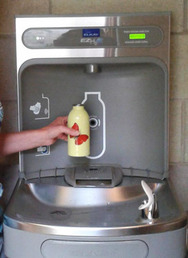
Bottle filling station

1.5 billion beverage bottles are purchased each year in Minnesota. 15,000 will be purchased during the 5 minutes it takes to read this newsletter.

With these kinds of numbers, you can understand why our everyday choices about beverage bottles add up. The small decision to use a reusable bottle filled with tap water, instead of a single-use water bottle that is tossed in the garbage, will reduce energy consumption by 85% and greenhouse gases by 79%.

Could Minnesota eliminate plastic bottles from our trash? I think so. Here is how you can do it, and help others do it too: 

Use less

  • Drink tap water. Bottled water costs as much as $10 per gallon compared to less than a penny per gallon for tap water. In addition, federal water quality standards are usually more rigorous for tap water than for bottled water. Those concerned with taste or quality can also add a filtration system. Read about filters in the EPA's Filtration Facts (pdf).
  • Buy only 1 or 2 reusable water bottles and use them frequently. Reusable water bottles are "in" right now, and come in fun colors and patterns. If you buy too many, though, you'll reduce the benefit of using a reusable bottle.
  • If you  must buy bottled water, choose the thinnest bottle and look for water that is bottled locally. This will reduce packaging volume and pollution from shipping.

Bottle label

Make it trendy

  • Compliment others who use a reusable bottle. Positive comments encourage people to continue their behavior. It can be as simple as saying "thanks for using a reusable bottle."
  • Ask your school or work place to install a water bottle filling station. Many have an electronic sensor that makes filling fast and sanitary. Seeing the station is also a reminder that reusable bottles are expected or encouraged.
  • If you host an event, provide a tap or pitcher for water. Encourage guests and attendees to bring a bottle or cup.
  • Label your bottle as "reusable." This will highlight why you are using it and encourage others to do the same. You can print our reusable bottle label on sticker paper or create your own designs. 

  • Spread the word by using posters, activities, and links provided by the City of Minneapolis on TapMpls.com.

Recycle more

  • Recycle every bottle you buy. Only 24% of bottles are recycled by Minnesotans every year. Make a commitment to recycle 100% of your plastic bottles even if that means carrying it home to recycle. Your good example will be noticed. Single-use bottles are in demand as a material to make new things. Plus, recycling saves energy, makes jobs, and feels good.
  • Start or improve the recycling program at your work or school. The Recycle More Minnesota website has a toolkit for schools. RethinkRecycling has resources, too.
  • Thank businesses who provide recycling. Just like people, positive comments encourage businesses to continue their behavior. If you don't see recycling options, ask for it. The more that business owners hear their customers asking for recycling, the sooner they will provide it.


Community events and resources

The Will Steger Foundation, Fresh Energy, and the Lutheran Coalition for Public Policy are organizing a series of free public forums about climate change. Hear from Will Steger, Minnesota's own eyewitness to global warming, and Fresh Energy's J. Drake Hamilton about effective clean energy solutions, dates in November & December throughout Minnesota.

The Northland Bioneers Conference is a local event featuring the plenary presentations from the National Bioneers Conference via DVD, hands on workshops and facilitated solutions-focused dialogues about sustainability, November 10, 8:30 a.m.-9 p.m., Macalester College (St. Paul).

Considering renewable energy at your home? Start by attending the free Solar Works! in Edina workshop. You'll get solar basics, rebates, and resources to get your project started, November 15, 7-8:30 p.m., Edina City Hall.

Mark your calendar for the 7th annual Green Gifts Fair, where you can find unique eco-gifts for the holiday season, November 17, Midtown Global Market (Minneapolis).


Thank you for reading Living Green 365. This newsletter is a publication of the Minnesota Pollution Control Agency. Please send questions or comments about living green to the address below.
 
Sincerely,
 
Britt Gangeness and the Living Green Team   

This email was sent to stan6637.gogreen@blogger.com using GovDelivery, on behalf of: Minnesota Pollution Control Agency 
520 Lafayette Road North · Saint Paul, MN 55155 · 1-800-439-1420